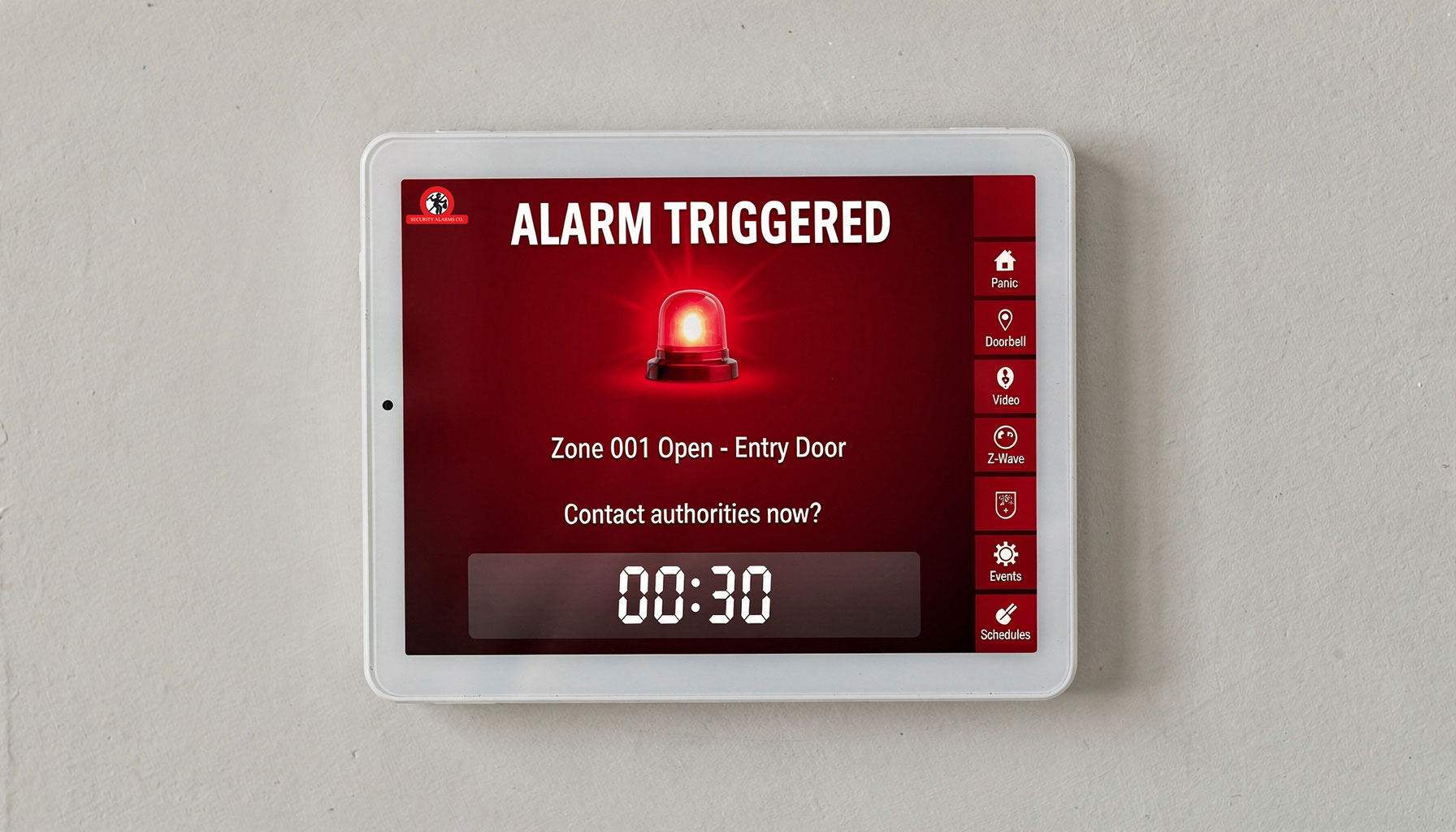
It’s 2:00 AM. A glass-break sensor trips in your living room. Your alarm panel immediately sends a signal to a monitoring station, and within seconds, a dispatcher is looking at your account. What happens next—and how quickly it happens—depends entirely on who’s on the other end of that signal.
For homeowners across eastern Oklahoma, this is the moment that separates a locally monitored alarm system from one managed by a national call center hundreds or thousands of miles away. The equipment on the wall may look similar, but the people and processes behind the scenes are fundamentally different.
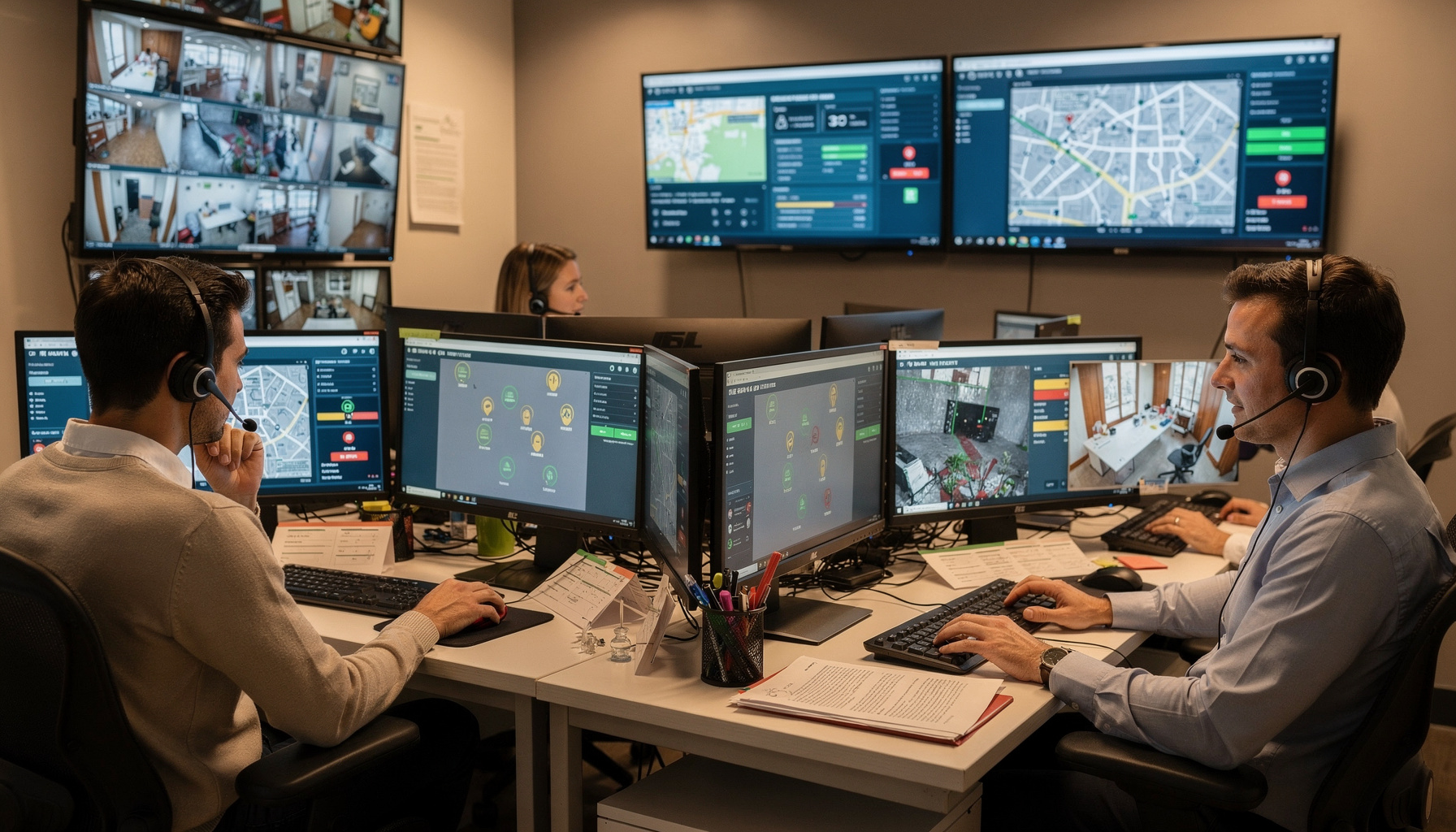
Security Alarms Company has operated its own in-house monitoring station in Muskogee, Oklahoma, since the company’s founding in 1973. With dispatchers on-site 24 hours a day, seven days a week, monitoring over 7,000 alarm systems, the company handles every step of the response process locally—from the initial alert to dispatch, verification, and follow-up.
Every monitored alarm system follows a similar chain of events when a sensor is activated. The alarm panel—in Security Alarms Company’s case, a DMP (Digital Monitoring Products) control panel—sends a cellular signal to the monitoring station. That signal carries critical details: the account address, the specific zone that triggered, and the type of alarm, whether it’s an intrusion, fire, panic, or environmental alert.
The dispatcher receives this information on their screen almost instantly. From there, the verification process begins. The dispatcher contacts the property owner or a designated keyholder to confirm whether the alarm is legitimate or accidental. If there’s no response, or if the situation is confirmed as an emergency, the dispatcher contacts local law enforcement or the fire department to request a response.
This entire sequence plays out within roughly 60 to 90 seconds when everything runs smoothly. But that timeline can stretch significantly depending on who’s handling the call and where they’re located.
When your alarm signal reaches Security Alarms Company’s monitoring station in Muskogee, it’s received by a dispatcher who lives and works in the same region you do. That might sound like a small detail, but it has a significant impact on how quickly and effectively the situation is resolved.
A dispatcher in Muskogee knows the communities they’re monitoring. They’re familiar with the jurisdictions that cover Broken Arrow, Tulsa, Claremore, Fort Smith, and every other city in Security Alarms Company’s service area. When an alarm triggers at a home in Wagoner or a business in Tahlequah, the dispatcher doesn’t need to search a national database to figure out which law enforcement agency to call—they already know.
Over 50 years of operating in eastern Oklahoma and northwest Arkansas, Security Alarms Company has built direct working relationships with local police departments and fire departments. These aren’t cold calls routed through a corporate switchboard. They’re established lines of communication that help cut through delays when minutes matter most.
A local dispatcher can cross-reference your account history and recognize patterns. If a particular sensor at your property has been tripping intermittently due to a maintenance issue, that context helps the dispatcher make a faster, smarter decision about whether to dispatch emergency services or contact you first to troubleshoot. This kind of judgment call reduces unnecessary police dispatches and helps homeowners avoid false alarm fines—something that can become expensive over time.
Security Alarms Company’s dispatchers are all background-checked and drug-tested, and they work directly for the same company that installed and maintains your system. That single point of accountability means the dispatcher, the installer, and the service technician are all part of the same team.
Many national alarm companies don’t operate their own monitoring stations. Instead, they outsource monitoring to third-party central stations that may be located out of state—or even out of the country. The dispatcher receiving your alarm signal has no connection to your community and no relationship with the responding agencies in your area.
When an alarm triggers through a national center, the dispatcher relies entirely on a database to determine which law enforcement or fire agency covers your address. In most cases this works, but it adds processing time. In areas with overlapping jurisdictions or recent boundary changes, it can also introduce routing errors that send the wrong agency or delay response.
National central stations handle a massive volume of accounts across the entire country. Each dispatcher is managing alerts from properties in dozens of states simultaneously. The result is longer queue times during high-activity periods and less time spent per account. Verification calls may take longer to initiate, and the process tends to be more rigid and scripted with less room for the kind of contextual judgment that a local dispatcher can apply.
With many national providers, the company that sold you the system, the company that monitors it, and the company that services it may all be different entities. If your alarm goes off and you need a technician, the monitoring center logs a service ticket that gets routed to a subcontractor. That subcontractor schedules a visit based on their availability—which could be days later.
Reaching a live person when you call can also be a challenge. Automated phone systems are standard with most national providers, and getting transferred to someone who can actually pull up your account and answer a specific question often requires patience.
A motion sensor trips at a warehouse after hours. A local dispatcher reviews the account, sees that a maintenance crew was scheduled to be on-site that evening, and contacts the business owner to verify before dispatching police. The situation is resolved quickly without triggering a false alarm fee.
At a national center, the dispatcher follows a standard protocol: attempt to reach the contact on file, and if no answer within a set window, dispatch emergency services. There’s no account context to draw from, so the response is procedural rather than informed.
A smoke detector activates at a home in Muskogee. A local dispatcher knows the nearest fire station and contacts them directly. There’s no lookup delay, no transfer between departments—just a fast, direct connection to the right people.
A national center handles the same alert by running the address through a dispatch database, identifying the correct fire department, and initiating contact. The process works, but each additional step adds time.
A panel starts throwing error codes at 11:00 PM. Security Alarms Company has local technicians on call 24 hours a day who can respond the same night if needed. The homeowner calls the office and speaks with a real person immediately.
With a national provider, the homeowner navigates an automated phone system, reaches a remote call center, and is told a technician will be scheduled—typically within three to five business days.
One of the most common practices in the national alarm industry is advertising a “free” security system. The reality is that the cost of the equipment is typically folded into an inflated monthly monitoring fee, often locked into a multi-year contract. The homeowner ends up paying for the system over time without realizing it.
Security Alarms Company takes a different approach. Equipment costs are quoted transparently and up front, separate from monitoring fees. Cellular alarm monitoring starts at $27 per month, and that fee goes directly toward funding the dispatchers, infrastructure, and local service team that your system depends on. There are no third-party subcontractors taking a cut.
Customers who monitor with Security Alarms Company also receive a lifetime warranty on control panels and keypads with cellular monitoring, along with a one-year warranty on all parts and labor. These are the kinds of commitments a company can make when it installs, monitors, and services the same systems under one roof.
The panel on your wall and the sensors on your doors are important, but they’re only one piece of the equation. When that alarm goes off in the middle of the night, the speed and quality of the response comes down to the people receiving the signal, the decisions they make, and how quickly they can get the right help to your door.
Security Alarms Company has been providing locally staffed, in-house alarm monitoring across eastern Oklahoma and northwest Arkansas for over 50 years. Every alarm signal is received by trained dispatchers in Muskogee who are backed by local technicians, direct law enforcement relationships, and the accountability that comes from being a family-owned company rooted in the community it serves.
If you’re currently with a national alarm provider and wondering whether you’re getting the response your home deserves, Security Alarms Company offers monitoring takeover services that let you switch without replacing your existing equipment. Call (918) 683-5600 today for a free consultation, or visit securityalarmsco.com to learn more about how local monitoring can make a real difference for your family’s safety.
We are a local, private owned company that has been in business for over forty years. We started out in 1973 in Hulbert, Oklahoma and moved to Muskogee, Oklahoma in 1987.
OK Lic. #021 AR Lic. #E0175